
Not medically reviewed.
Side effects
Managing nausea on GLP-1 medications
Why nausea is common on GLP-1 medicines, what labels and experts say, and food and timing habits to discuss with your clinician, plus red flags.

Seek urgent care or emergency help for symptoms such as severe or persistent abdominal pain (with or without vomiting), signs of a severe allergic reaction (swelling of face/lips/tongue, trouble breathing), symptoms of pancreatitis or gallbladder problems as described on your medication guide, chest pain, fainting, or thoughts of self-harm. This list is not complete — follow your clinician’s and the product Medication Guide’s instructions.
Updated October 26, 2026.
Nausea is the side effect that shows up in almost every GLP-1 group chat. It is common, often manageable, and sometimes a signal to slow down with your care team — not a moral test of toughness.
How common is nausea?
In adult Wegovy weight-management trials reported in the FDA label, nausea occurred in 44% of participants on Wegovy 2.4 mg versus 16% on placebo. Vomiting occurred in 24% versus 6%. Gastrointestinal adverse reactions overall were reported by 73% on Wegovy injection versus 47% on placebo, and were most frequent during dose escalation (FDA Wegovy label).
A joint advisory from the American College of Lifestyle Medicine, American Society for Nutrition, Obesity Medicine Association, and The Obesity Society summarizes nausea rates across obesity trials in the 25%–44% range and notes symptoms are more likely in the first weeks and with dose increases, often improving on a stable dose (Mozaffarian et al., PMC).
Tirzepatide trials also list nausea among the most common effects; see your Zepbound or Mounjaro Medication Guide for product-specific rates.
Why it happens
These medicines delay gastric emptying and act on brain pathways involved in appetite and nausea (Wegovy label Clinical Pharmacology; Mozaffarian et al.). The joint advisory notes that nausea often occurs in the morning or after longer periods without eating, that vomiting is more likely with large meals, and that very little hunger can lead people to go several hours without eating (Mozaffarian et al., Obesity Pillars 2026). Its list of eating habits to minimize includes long periods without meals and large meals. That is one reason regular, smaller meals are a common suggestion.
The label also warns that severe GI reactions can occur and that Wegovy is not recommended in patients with severe gastroparesis (FDA label §5.6).
Practical habits many clinicians suggest (still not a prescription)
These themes appear repeatedly in expert nutrition advisories and clinical commentaries. Adapt them with your clinician or a registered dietitian — especially if you have diabetes, kidney disease, or take other medicines.
1. Expect titration weeks to be bumpier
The Wegovy label allows delaying escalation by 4 weeks if a dose is not tolerated (FDA label). Asking for a slower climb is a medical conversation, not a failure.
2. Smaller, more frequent meals
A JAMA Internal Medicine piece on lifestyle factors with GLP-1s recommends smaller, nutrient-dense meals and avoiding fried foods and carbonated drinks when nausea is active (JAMA Intern Med). The joint nutrition advisory similarly suggests smaller, more frequent meals and limiting fatty or very high-fiber foods in the first days after a change (Mozaffarian et al.).
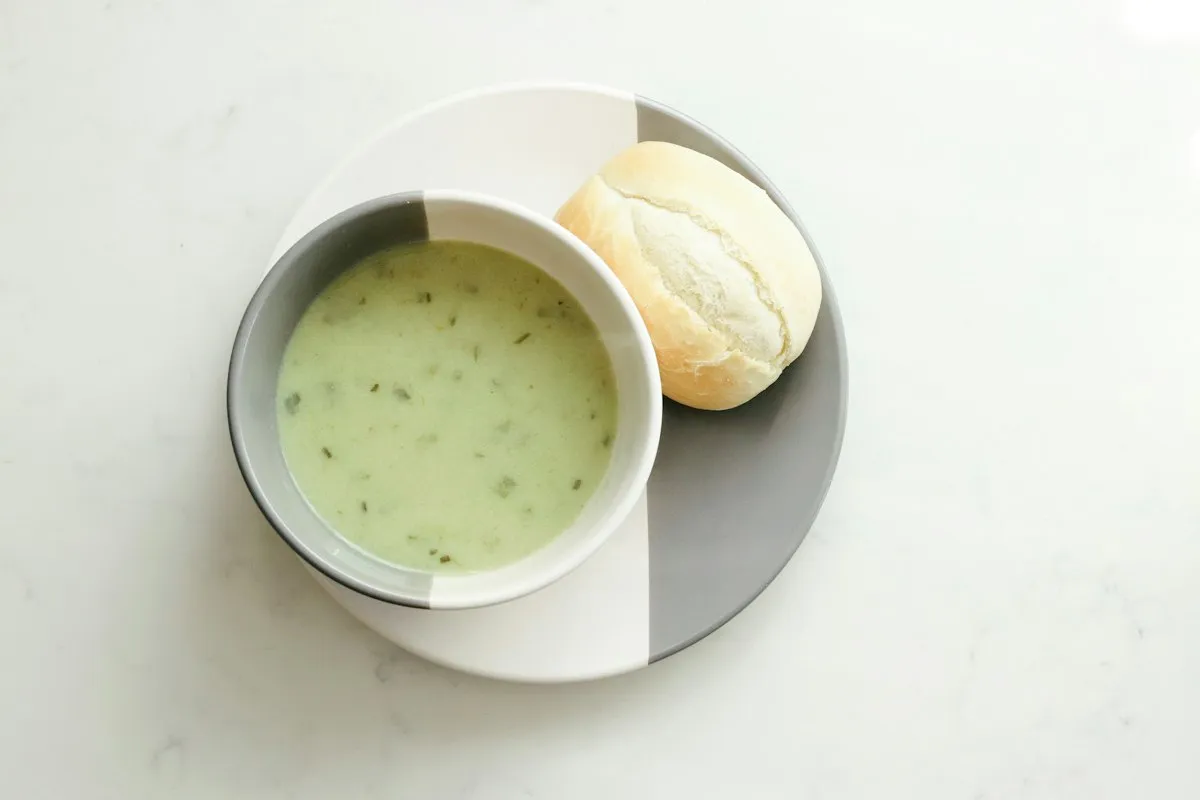
3. Do not “run on empty”
Some people avoid eating because they feel queasy, which can worsen nausea and raise dehydration risk. The advisory describes a cycle of not eating → worse nausea → still not eating. A small breakfast and additional small meals every few hours, with fluids, is a common counseling pattern (Mozaffarian et al.).
4. Prioritize fluids
Dehydration from nausea, vomiting, or diarrhea has been linked to acute kidney injury in labeled warnings and postmarketing reports (FDA Wegovy label §5.5). The JAMA commentary suggests aiming for more than 2–3 liters of fluid daily unless your clinician has restricted fluids (JAMA Intern Med). People with heart or kidney disease need individualized targets.
5. Choose gentler textures when needed
Broths, yogurt, eggs, smoothies, toast, bananas, and similar lower-fat options are often easier than fried or heavily spiced meals during flares. Return to your usual pattern as symptoms settle — variety still matters for nutrients (protein guide).
6. Ginger, peppermint, pacing
The joint advisory mentions ginger or peppermint tea and acupressure bands as options some people try (Mozaffarian et al.). Evidence quality varies; they are adjuncts, not cures. Ask your clinician before adding supplements that could interact with other conditions.
7. Medicines for nausea
Anti-nausea prescriptions or OTCs are sometimes used short-term around escalations. The advisory notes that some antiemetics (for example those affecting serotonin pathways) can worsen constipation — a tradeoff your clinician can navigate (Mozaffarian et al.). Do not start prescription antiemetics from a friend or leftover bottle.
What nausea is not
- Not something you have to simply endure. The label lists nausea as a common adverse reaction (44% vs. 16% on placebo in adult weight-management trials) and says to follow the escalation schedule to reduce the risk of GI reactions (FDA Wegovy label §2.2 and Table 3). If it is hard to manage, tell your clinician.
- Not something to hide until you quit. Early contact with the clinic can prevent discontinuation that you did not actually want (adherence challenges summarized in Mozaffarian et al.).
- Not always “just GLP-1 nausea.” Severe, persistent abdominal pain — with or without vomiting — is a labeled reason to suspect pancreatitis and stop the drug pending evaluation (FDA Wegovy label §5.2). Gallbladder disease is also more common with weight-loss therapy on the label.
A sample “queasy day” template (illustrative only)
This is not a meal prescription — just a pattern people and dietitians often improvise when nausea is loud:
- Morning: A few crackers or toast; sip water or oral rehydration fluid if your clinician is OK with it; optional ginger tea.
- Mid-morning: Greek yogurt or a protein shake you actually tolerate.
- Midday: Small portion of rice, potato, or soup plus a lean protein.
- Afternoon: Banana or applesauce; more fluids.
- Evening: The softest version of dinner you can manage; stop eating before stuffed.
- Evening check: If you have peed very little, feel dizzy, or cannot keep fluids down, contact a clinician or urgent care — dehydration is a labeled concern.
Rebuild toward normal variety as soon as symptoms allow so vitamin and mineral intake does not stay minimal for weeks (nutrient-deficiency risks summarized in Mozaffarian et al.).
Work, driving, and social plans
Fatigue and dizziness appear in Wegovy trial adverse-reaction tables at higher rates than placebo (FDA label Table 3). On escalation weeks, some people avoid big dinners out or long meetings right after injection day until they know their pattern. That is practical pacing, not isolation. If dizziness is new or severe, do not drive — get medical advice.
Pair nausea care with the rest of the plan
If vomiting is frequent, protein and calorie intake can crash — which matters for muscle. See How much protein do you need on a GLP-1? and our upcoming constipation guide. For a week-by-week emotional picture of the first month, read our illustrative journey.
For side-by-side product comparisons, see our sister site’s Wegovy vs. Zepbound comparison.
The bottom line
Nausea is one of the most common GLP-1 side effects, especially during dose increases. Labels and expert advisories point to slower titration when needed, smaller lower-fat meals, steady fluids, and early clinician contact. Red-flag pain is different from ordinary queasiness — treat it that way.
Talk to your clinician before changing your dose, holding injections, or adding anti-nausea drugs.
Related
Sources
- Wegovy (semaglutide) Prescribing Information. FDA.
- Mozaffarian D, et al. Nutritional priorities to support GLP-1 therapy for obesity: a joint Advisory from the American College of Lifestyle Medicine, the American Society for Nutrition, the Obesity Medicine Association, and The Obesity Society. Obesity Pillars. 2026;18:100269 (corrected republication of Obes Pillars 2025;15:100181). doi:10.1016/j.obpill.2026.100269.
- Integrating Diet and Physical Activity When Prescribing GLP-1s. JAMA Internal Medicine.
More in Side effects
Side effects
Side effects of Zepbound: what the FDA label reports
Side effects of Zepbound from the FDA label: common reactions by dose vs placebo, stomach side effects, quit rates, warnings, and when to call a doctor.
Side effects
Sulfur burps on Ozempic/Wegovy: causes and what helps
How to get rid of sulfur burps from Ozempic or Wegovy: what the FDA labels report on belching and diarrhea, what's known about the smell, and when to call.
Side effects
Hair loss on Zepbound and Mounjaro: labels and trials
Hair loss on Zepbound or Mounjaro: how often trials reported it, how it ties to weight loss, what shedding usually looks like, and when to see a doctor.