
Not medically reviewed.
Side effects
Hair loss on Zepbound and Mounjaro: labels and trials
Hair loss on Zepbound or Mounjaro: how often trials reported it, how it ties to weight loss, what shedding usually looks like, and when to see a doctor.
Seek urgent care or emergency help for symptoms such as severe or persistent abdominal pain (with or without vomiting), signs of a severe allergic reaction (swelling of face/lips/tongue, trouble breathing), symptoms of pancreatitis or gallbladder problems as described on your medication guide, chest pain, fainting, or thoughts of self-harm. This list is not complete — follow your clinician's and the product Medication Guide's instructions.
Last reviewed: November 11, 2026. Sources checked against the Zepbound prescribing information and Mounjaro prescribing information (both revised 11/2026).
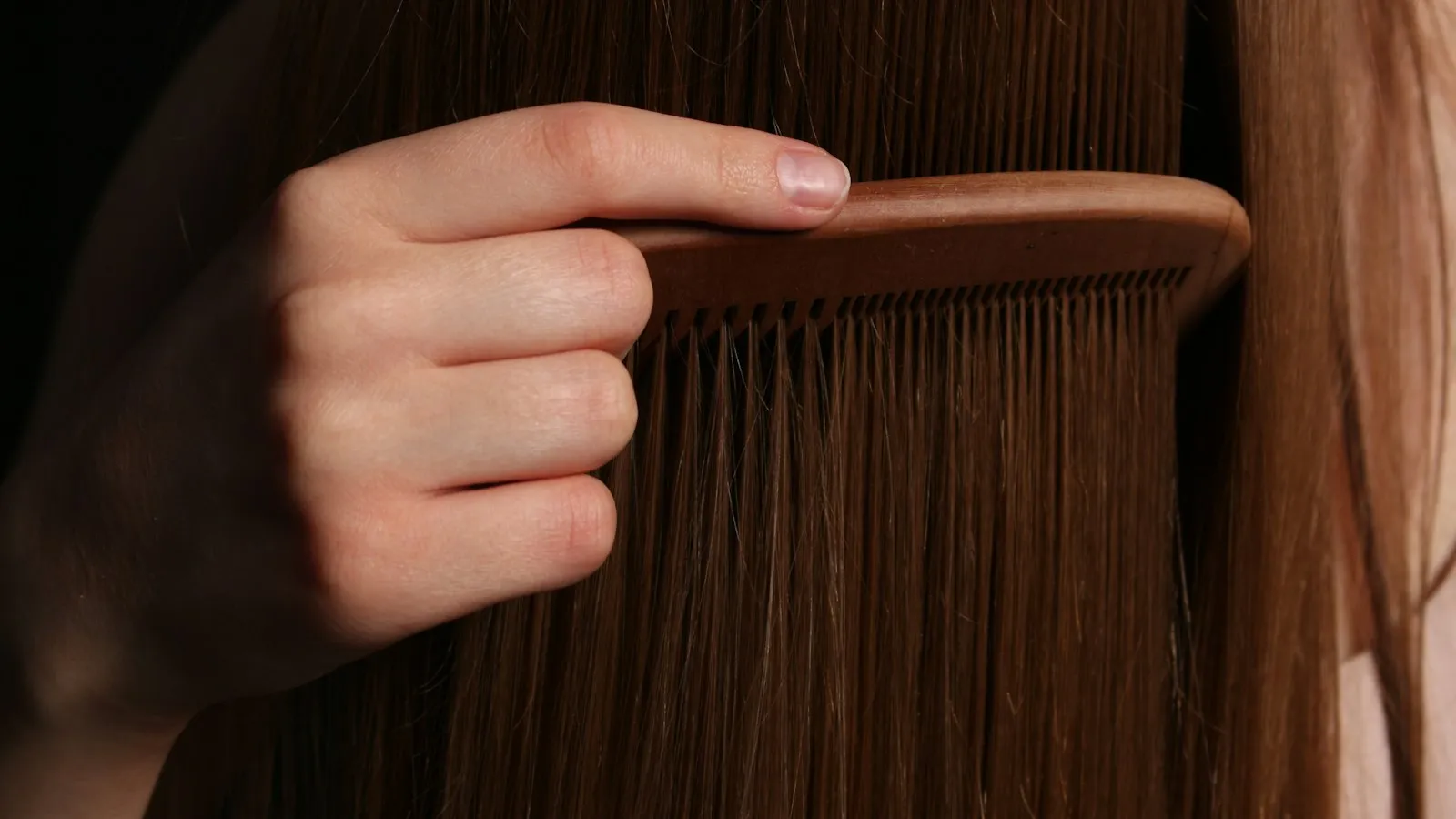
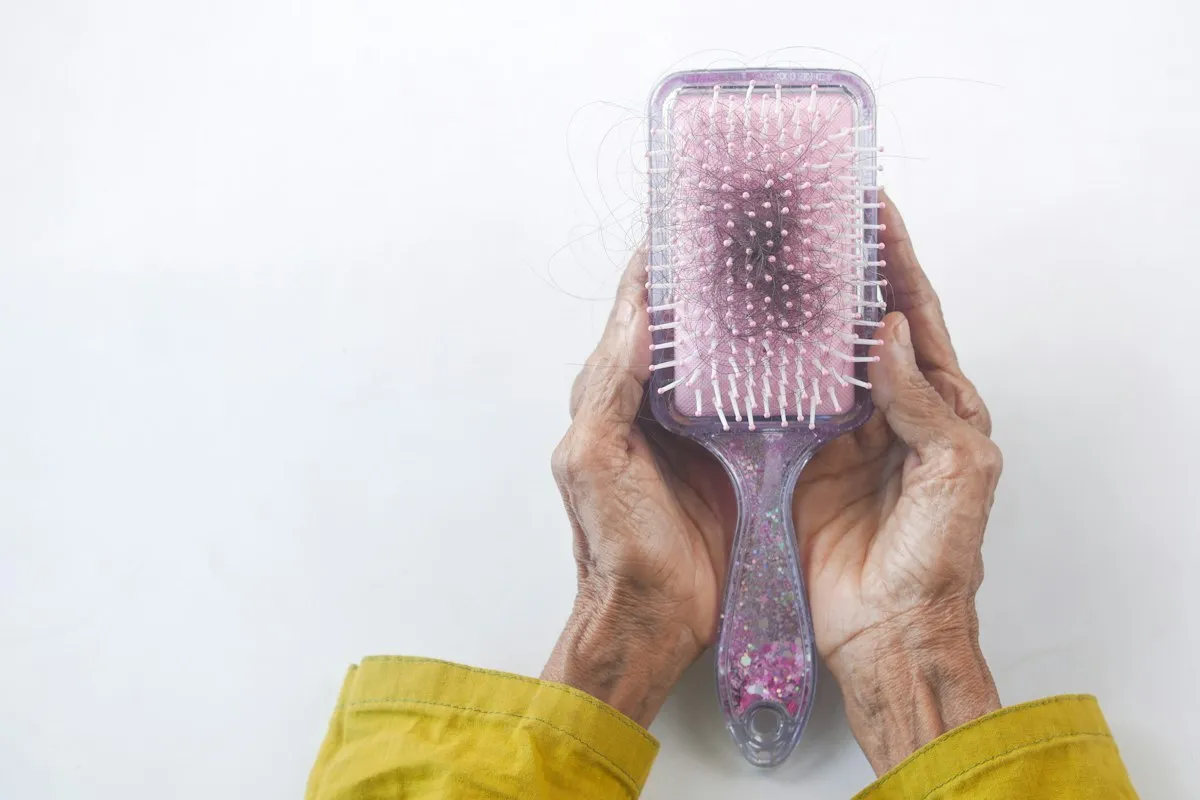
Finding more hair than usual in your brush can be upsetting, especially when you're working hard on your health. If you're on Zepbound or Mounjaro (both tirzepatide), you're not imagining that hair loss comes up. It's listed on the Zepbound label. This guide covers what the labels and trials actually report, why weight loss itself is part of the picture, and when it's worth getting checked.
Talk to your clinician before stopping or changing your medication because of hair changes. Hair shedding has many possible causes, and a clinician can help sort them out.
The short answer
- Zepbound: Hair loss is one of the common side effects listed on the label. In the two main weight-reduction trials, it was reported by 4% to 5% of people on Zepbound versus 1% on placebo (Zepbound USPI, Table 1).
- The label links it to weight loss. It says hair loss reactions with Zepbound "were associated with weight reduction" (Zepbound USPI §6.1).
- Mounjaro: Its label (type 2 diabetes) lists alopecia under postmarketing reports, meaning cases reported after approval, where frequency and cause can't be reliably worked out (Mounjaro USPI §6.2).
- Hair shedding after major weight loss is a known pattern in general. The American Academy of Dermatology (AAD) says it usually settles once the body readjusts (AAD).
What the Zepbound label reports
The Zepbound label pools two placebo-controlled weight-reduction trials, SURMOUNT-1 (adults without diabetes) and SURMOUNT-2 (adults with type 2 diabetes). Together, they included 2,519 people treated with Zepbound for up to 72 weeks (Zepbound USPI §6.1).
| Group (pooled Studies 1 and 2) | Hair loss reported |
|---|---|
| Placebo | 1% |
| Zepbound 5 mg | 5% |
| Zepbound 10 mg | 4% |
| Zepbound 15 mg | 5% |
Source: Zepbound USPI, Table 1. These are trial results by assigned dose, not a guide to choosing a dose.
The label adds three details that help put this in context (Zepbound USPI §6.1):
- It was tied to weight reduction. Hair loss reactions were "associated with weight reduction."
- It was reported more often in women. On Zepbound, 7.1% of women versus 0.5% of men reported hair loss. On placebo, it was 1.3% of women versus 0% of men.
- Nobody on Zepbound stopped treatment because of it. No Zepbound-treated participants, and one placebo participant, discontinued because of hair loss.
Another trial: SURMOUNT-3
In SURMOUNT-3, adults first went through a 12-week intensive lifestyle program. Those who lost at least 5% of their weight then received tirzepatide (10 mg or 15 mg, the highest dose each person tolerated) or placebo for 72 weeks. Alopecia was reported in 7.0% of the tirzepatide group versus 1.4% of the placebo group (Wadden et al., Nature Medicine 2023).
What the Mounjaro label reports
Mounjaro is the same medicine, approved for type 2 diabetes. Its clinical-trial section doesn't list hair loss. Instead, alopecia appears in the postmarketing section (Mounjaro USPI §6.2).
The label explains why those reports work differently. They're "reported voluntarily from a population of uncertain size," so it isn't always possible to estimate how often they happen or to prove the drug caused them (Mounjaro USPI §6.2). In other words, the Mounjaro label confirms people have reported hair loss, but it doesn't give a rate.
Why weight loss can lead to shedding
The AAD explains that shedding 50 to 100 hairs a day is normal. Shedding much more than that is called telogen effluvium. The AAD lists losing 20 pounds or more among the stressors that commonly trigger it, alongside childbirth, high fever, surgery and major stress (AAD).
According to the AAD:
- People usually notice the extra shedding a few months after the triggering event.
- It's typically temporary. As the body readjusts, shedding stops, and hair tends to regain its normal fullness within six to nine months.
- If the stressor continues, shedding can last longer.
That timing can be confusing on a GLP-1. Hair changes may show up months into treatment, not right after your first dose.
The AAD also separates shedding from hair loss (when something stops hair from growing), which has other causes, such as hereditary hair loss, an overreacting immune system, some drugs and treatments, and hairstyles that pull on the hair. A dermatologist can tell the difference (AAD).
What researchers are still studying
Since these medicines became widely used, dermatology researchers have started looking at hair loss in large databases. Examples include an analysis of FDA adverse-event reports for semaglutide and tirzepatide (Godfrey et al., JEADV 2025) and a health-records study comparing tirzepatide with other weight-loss medicines for telogen effluvium (Neubauer et al., JAAD 2025).
These are observational studies, so they can find associations but can't prove that a drug causes hair loss, or separate the drug's effect from the weight loss itself. For now, the placebo-controlled trial numbers in the label are the clearest data we have.
Gentle, practical steps to discuss
There's no label-approved way to prevent hair loss on tirzepatide. These are general ideas to raise with your care team, not instructions:
- Track it. Note when you first noticed it, roughly how much weight you'd lost by then, and whether it's diffuse shedding or patches. Photos taken in the same light every few weeks can help.
- Look at your eating pattern. When appetite drops, meals can shrink a lot. Ask your clinician or a registered dietitian whether your overall nutrition, including protein, is on track. Our guide to protein on a GLP-1 explains what expert groups recommend.
- Check before you supplement. Ask your clinician or pharmacist before starting hair, vitamin or mineral supplements, especially if you take other medicines.
- Be kind to your hair. The AAD lists hairstyles that pull on the hair and harsh hair-care products among common causes of hair loss, so gentle styling is a reasonable choice while things settle (AAD).
When to talk to a doctor
It's worth contacting your clinician, or asking for a dermatology referral, if:
- the shedding is heavy or getting worse, or is affecting how you feel day to day
- you see bald patches, or changes on your scalp such as redness, scaling or pain
- the shedding lasts longer than the six to nine months the AAD describes for typical post-stress shedding
- you're thinking about stopping or changing your medication because of it
The AAD advises talking with your doctor if you suspect a medicine is causing hair loss, and not stopping a treatment on your own, because stopping suddenly can cause serious side effects (AAD).
FAQ
Is hair loss on Zepbound permanent?
The label doesn't say how long it lasted in trials. Shedding triggered by significant weight loss is usually temporary, and the AAD says hair tends to regain its normal fullness within six to nine months once the body readjusts (AAD). Ask a dermatologist if it isn't improving.
Does a higher dose cause more hair loss?
In the pooled Zepbound trials, hair loss rates were similar across doses: 5% (5 mg), 4% (10 mg) and 5% (15 mg), versus 1% on placebo (Zepbound USPI, Table 1). Dosing decisions belong to you and your clinician.
Does Mounjaro cause hair loss?
Mounjaro's label lists alopecia among postmarketing reports, without a rate (Mounjaro USPI §6.2). Because Mounjaro and Zepbound share the same active ingredient, the Zepbound trial data are a useful reference point, but each label describes its own populations and uses.
Does Ozempic or Wegovy cause hair loss too?
This article covers tirzepatide. Semaglutide products have their own labels, so check the label for your product or ask your pharmacist.
Should I stop my medication if my hair is thinning?
Don't stop or change your dose on your own. Talk to your clinician first. They can look for other causes and weigh the trade-offs with you.
The bottom line
Hair loss is a recognized, usually modest side effect of tirzepatide in trials. It's reported more often in women, it's tied to weight reduction, and nobody on Zepbound in the pooled trials stopped treatment over it. Shedding after big weight loss is often temporary, but it's still worth raising with your clinician, especially if it's heavy, patchy or lasting. For more on side effects, see managing nausea and your first month, week by week.
Sources
- Eli Lilly and Company. Zepbound (tirzepatide) injection, U.S. prescribing information, §6.1 and Table 1. Revised 11/2026
- Eli Lilly and Company. Mounjaro (tirzepatide) injection, prescribing information, §6.2 Postmarketing Experience. Revised 11/2026
- DailyMed. Zepbound (tirzepatide) injection label (SPL published September 2, 2026)
- Wadden TA, et al. Tirzepatide after intensive lifestyle intervention in adults with overweight or obesity: the SURMOUNT-3 phase 3 trial. Nat Med. 2023;29:2909-2918. doi:10.1038/s41591-023-02597-w. PMC
- American Academy of Dermatology. Do you have hair loss or hair shedding? (accessed November 11, 2026)
- Godfrey H, et al. Alopecia associated with the use of semaglutide and tirzepatide: a disproportionality analysis using the FDA adverse event reporting system (FAERS) from 2022 to 2023. J Eur Acad Dermatol Venereol. 2025;39(2):e153-e154.
- Neubauer Z, et al. Increased risk of telogen effluvium with tirzepatide compared to other weight loss medications: a retrospective cohort TriNetX database study. J Am Acad Dermatol. 2025;93(6):1612-1614.
More in Side effects
Side effects
Side effects of Zepbound: what the FDA label reports
Side effects of Zepbound from the FDA label: common reactions by dose vs placebo, stomach side effects, quit rates, warnings, and when to call a doctor.
Side effects
Sulfur burps on Ozempic/Wegovy: causes and what helps
How to get rid of sulfur burps from Ozempic or Wegovy: what the FDA labels report on belching and diarrhea, what's known about the smell, and when to call.
Side effects
Managing nausea on GLP-1 medications
Why nausea is common on GLP-1 medicines, what labels and experts say, and food and timing habits to discuss with your clinician, plus red flags.